
Exercise ‘better than drugs’ to stop cancer returning

Exercise better than drugs to stop cancer returning - a new study shows
Making the front pages of major publications around the world recently was one piece of news that gave cancer survivors real, practical hope: exercise isn’t just good for you — it can be one of the most powerful tools in your recovery and long-term health toolkit.
A landmark decade-long study presented at the 2025 American Society of Clinical Oncology (ASCO) Annual Meeting and published in the New England Journal of Medicine found that structured exercise programmes can significantly reduce the risk of cancer recurrence and death among people treated for cancer. Over nearly eight years of follow-up, those who took part in a tailored exercise intervention had a 28% lower risk of recurrent or new cancers and a 37% lower risk of dying compared with those who only received general health education materials.
Major outlets such as The Guardian covered these findings extensively, with headlines proclaiming that structured exercise might be “better than drugs” for preventing cancer returning. Scientific American also highlighted that strong evidence now shows exercise can lower recurrence risk and improve survival across different cancer types, once thought to be driven only by medical treatments.
This isn’t just about a few extra steps a day — though walking is wonderful — it’s about a consistent, safe exercise plan that’s personalised to you.
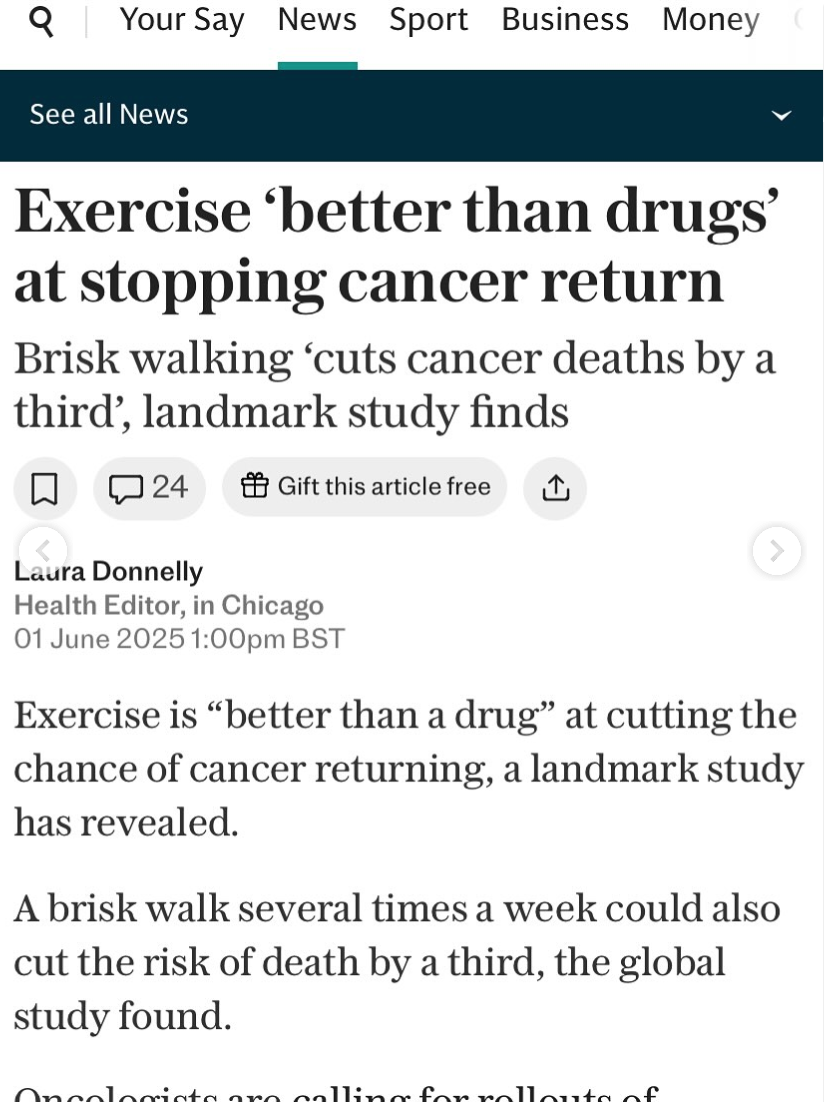
This article was published in the UK Guardian
Why exercise makes a difference
We’ve known for some time that keeping active can improve quality of life, reduce fatigue, help manage treatment side effects, and improve strength and mood. Guidelines from organisations like the American College of Sports Medicine emphasise that regular physical activity can help survivors live better and potentially live longer, even after diagnosis.
But the recent ASCO-linked trial adds something important: the greatest benefits came from exercise that was structured and supported — usually with the help of a trainer or specialist. Simply knowing exercise is good isn’t enough; being guided through it is what leads to measurable changes in disease-free survival.
Why a trainer matters
From my own experience — and from the patients I work with — working with a qualified trainer who understands cancer recovery makes all the difference. And here’s why:
1. Confidence
After treatment, your body might feel unfamiliar. You might worry: What can I safely do? What will actually help? A trainer who is qualified in cancer rehab can help you navigate your fears and set realistic, safe goals. When your body has gone through so much, having someone knowledgeable beside you is reassuring in a way that generic advice can never match.
2. Accountability
Let’s be honest — if you’re doing workouts solo, it’s all too easy to skip them. But when someone is supporting you, checking in, and genuinely invested in your progress, you turn up — and you give it your effort. I know I would do maybe half the workouts, and at half the effort, if it wasn’t for the fact that my coach is tracking my progress and cheering me on.
We should be able to self-motivate; and some people absolutely can. But for many of us — especially in the messy space of post-cancer recovery — that extra structure makes the journey feel doable, not overwhelming.
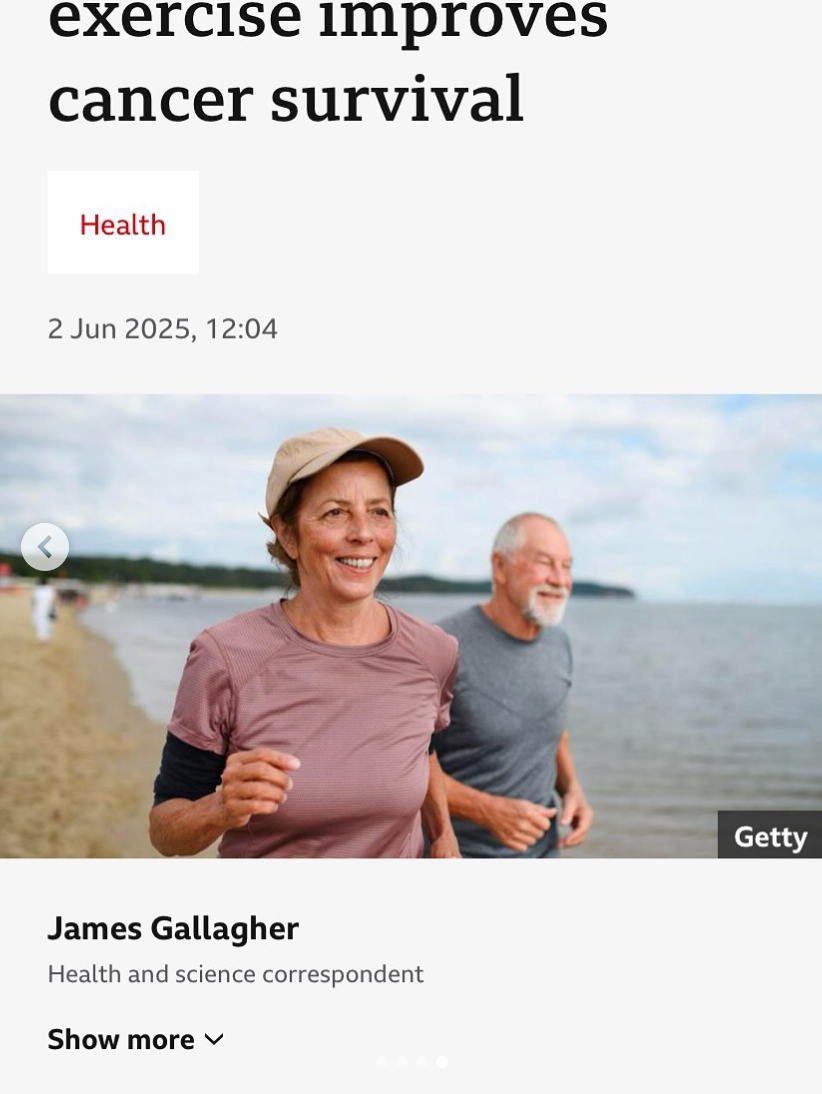
Exercise improves cancer survival - for many common cancers
Hope grounded in science (and in experience)
The science now backs up what exercise oncologists have been saying for years: moving your body after cancer isn’t just “good advice”; it can meaningfully reduce recurrence and improve survival. If you’re navigating survivorship, know this: you don’t have to figure it out alone. Start small, stay consistent, and consider working with someone who can guide you safely.
Progress isn’t linear — but tiny steps add up to powerful change.