
What is a cancer coach and what does cancer fitness coaching involve?
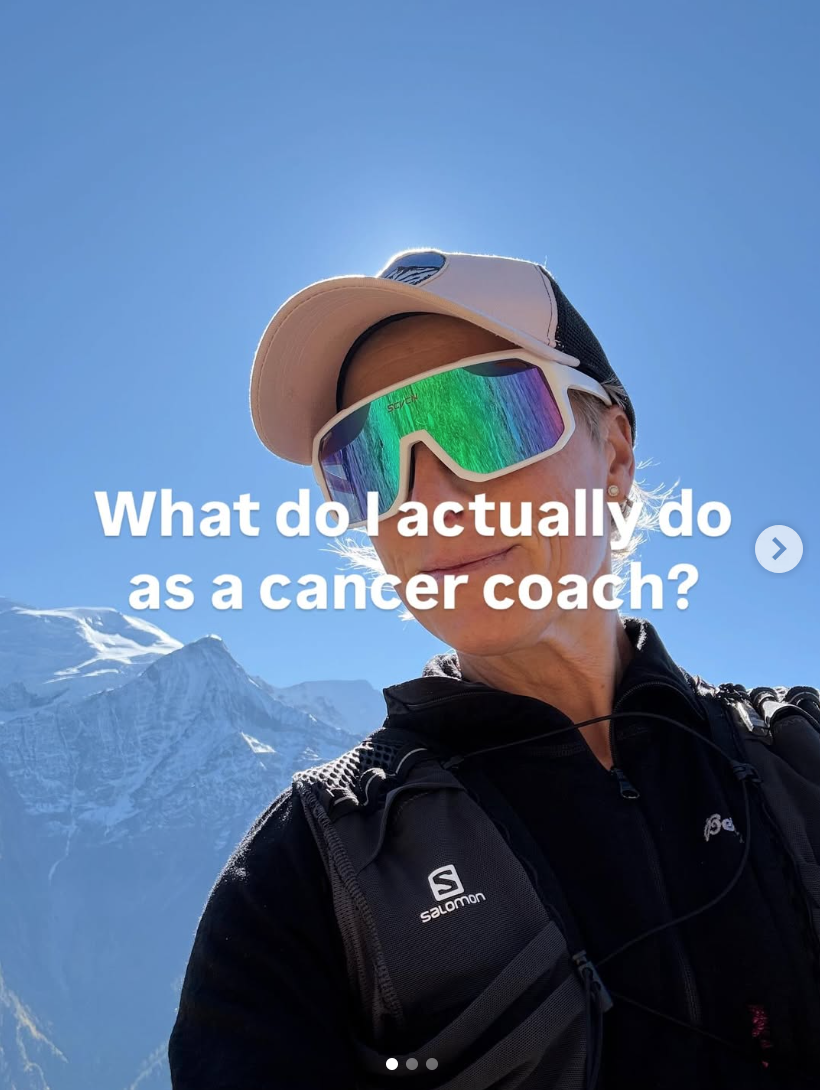
Instagram would have you believe I spend my whole life in a smiley bubble, in the mountains. Here’s what I actually do as a cancer coach and what to expect if you sign up for cancer fitness coaching.
If you only saw my social media, you’d be forgiven for thinking I spend my entire life outside, running up mountains with a big smile on my face.
And yes — I do love those moments. They’re a huge part of what keeps me grounded and feeling like myself.
But they’re not the whole picture.
Most of my time is actually spent working quietly behind the scenes, supporting people who are navigating one of the most challenging experiences life can throw at them. Because alongside the running and fresh air, I’m a cancer fitness coach.
And it’s work I care about deeply.
So, what is a cancer coach?
In simple terms, a cancer fitness coach is someone who helps people stay active — or gently return to movement — during and after cancer.
But in reality, it’s much more than that.
It’s about understanding that cancer changes things. Your body, your energy, your confidence, your priorities — all of it can shift. And the approach to exercise needs to reflect that.
This isn’t about pushing harder or chasing personal bests.
It’s about helping you feel safe in your body again.
Why this work matters to me
I’ve been coaching for over 15 years, but I specialised in working with cancer patients more recently — after going through my own diagnosis and recovery.
Like many people, I had to rebuild. Not just my fitness, but my trust in my body. I had to figure out what movement looked like now, how to manage fatigue, how to deal with aches and pains that didn’t used to be there, and how to balance it all with the emotional side of things too.
That experience changed everything.
It gave me a completely different perspective — not just as a coach, but as someone who truly understands what it feels like to be in it.
And it’s why I feel so strongly about supporting others to exercise safely, confidently, and in a way that actually works for their life.
It’s not just about exercise
One of the biggest misconceptions is that coaching is simply about being given a programme to follow.
In this space, it’s much more personal than that.
Every person I work with is different. Different diagnosis, different treatment, different side effects, different lifestyle, different goals. So everything starts with listening.
What’s going on for you right now?
How are you feeling?
What do you need?
From there, we build something that fits around your life — not something that adds pressure to it.
That might include:
Gentle strength work to rebuild muscle and stability
Mobility and stretching to ease stiffness or discomfort
Cardiovascular exercise to improve energy and endurance
Or simply getting you moving again after a period of inactivity
But it always comes back to one thing: meeting you where you are.
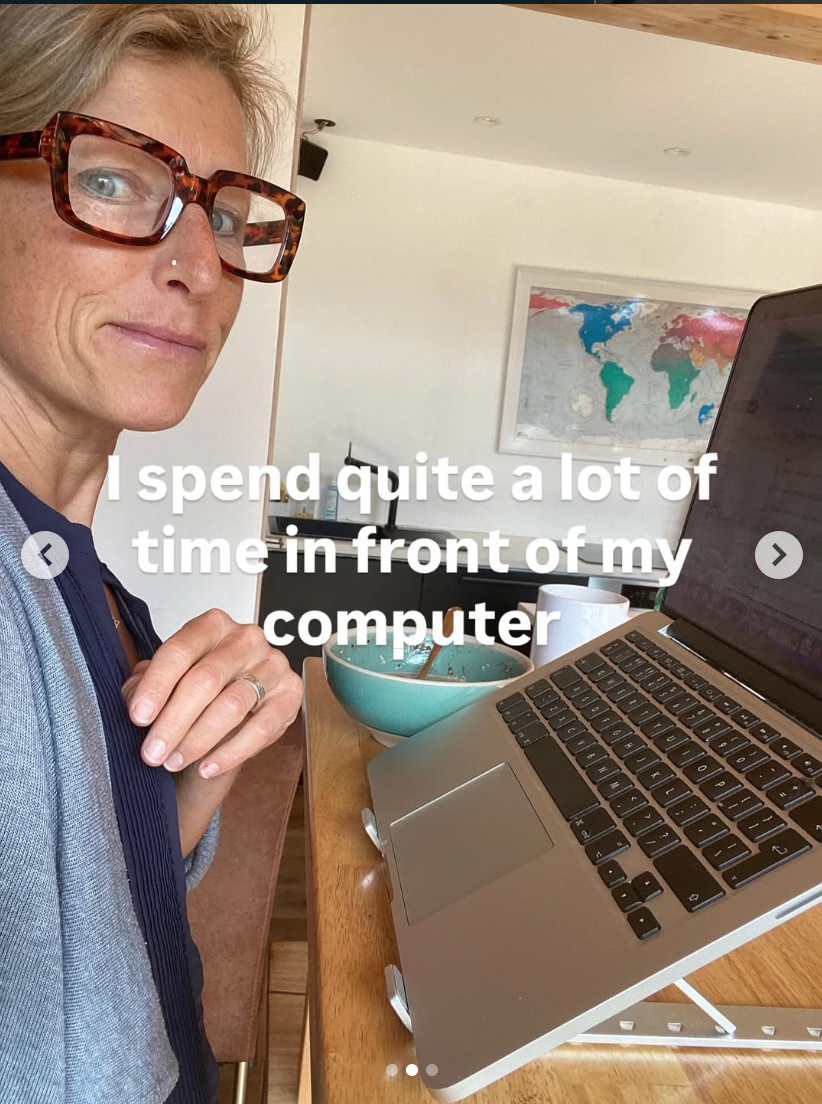
I spend a lot of time in front of my computer, speaking to clients, writing programmes and notes. I also give quite a lot of my time for free to various charities and organisations who support cancer survivors to move - as I know that not everyone can afford a cancer coach.
A flexible, real-life approach
One of the most important parts of cancer fitness coaching is flexibility.
Because life during and after cancer isn’t predictable.
Energy levels can change day to day. Treatment can bring unexpected side effects. Appointments, family life, work — it all has to fit together.
So your programme isn’t fixed or rigid. It evolves with you.
Some weeks you might feel strong and capable. Other weeks, everything might feel harder. And that’s okay.
We adjust. We pause if needed. We change direction.
There’s no guilt, no pressure — just support.
Support, not just a programme
Another key part of what I do is staying connected.
This isn’t a case of sending you a plan and leaving you to it.
We check in regularly. We talk. We adapt things as we go. There’s space to ask questions, to share how you’re feeling, to celebrate the small wins — and to navigate the tougher days too.
Because accountability isn’t about being told off if you don’t do something.
It’s about having someone in your corner.
Understanding on a different level
There’s something quite unique about working with someone who has been through cancer themselves.
It means I understand the language, the fears, the frustrations — and the small, often invisible victories.
I understand what it’s like to feel disconnected from your body. To worry about doing too much, or not enough. To feel exhausted for no obvious reason. To wonder if things will ever feel “normal” again.
And I also understand that they can.
That life — and movement — can feel good again.
A holistic picture
Exercise doesn’t exist in isolation.
Your energy, your sleep, your nutrition, your stress levels, your work, your family life — it all plays a role in how you feel day to day.
So cancer fitness coaching looks at the bigger picture.
It’s about helping you find a rhythm that supports your overall wellbeing, not just ticking off workouts. Sometimes that means doing less, not more. Sometimes it means focusing on rest, or stress management, or simply creating a bit of space in your week.
Everything is connected.
Hope, in a very real way
Perhaps one of the most important parts of this work is offering hope.
Not in a vague or unrealistic way — but in a grounded, honest one.
By sharing my own journey, by showing what’s possible over time, and by supporting others as they find their way forward, I hope to offer a sense that things can improve.
That your body can feel like yours again.
That strength, confidence, and energy can come back — even if it takes time.
I love my work as a cancer exercise specialist and I care very deeply
If you’re wondering where to start
If you’re a cancer patient or survivor, you don’t need to have it all figured out.
You don’t need to be fit. You don’t need loads of energy. You don’t need a perfect plan.
You just need a starting point.
That might be a short walk. A gentle stretch. Or simply reaching out for some guidance and support.
Because you don’t have to navigate this on your own.
And with the right support, movement can become something that helps you feel stronger, steadier, and more like yourself again.
Life can be good on the other side.
And you deserve to feel that.