
Why is strength training so important for cancer patients?

If I’m honest, I don’t love the gym. I’d rather be outside. But strength training is so important fo cancer patients
It has been over a month since I went to the gym.
Why?
Honestly? It’s just not my favourite type of exercise. And… life! School holidays, travel, a minor medical procedure, work. I just haven’t made it. I’ve made excuses and done lots of other stuff instead. I’m triathlon training, so it’s been all swim–bike–run.
But given my osteoporosis, my age, and the huge benefits I know come from lifting weights, I finally made myself make it a priority today.
OMG. I felt weak.
I am never leaving it this long again.
Things I used to be able to do easily felt so hard. Even the body-weight stuff. I knew it would be like that — but it’s still confronting to feel how quickly strength seeps away. There’s no “getting away with it” anymore.
And this is exactly why strength training is so important for cancer patients.
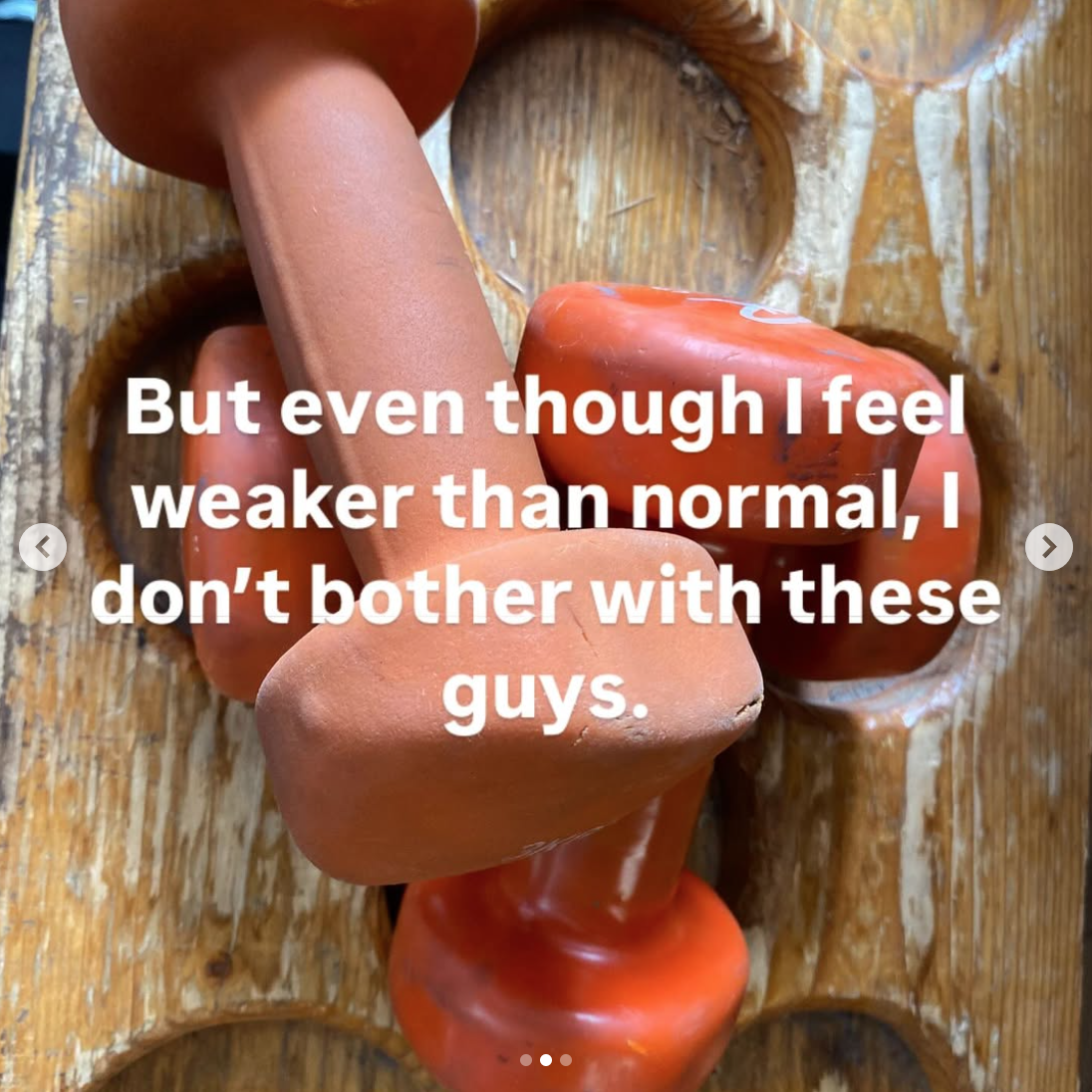
Even cancer patients should choose the heaviest weight they can manage for 6-8 repetitions.
Cancer — and its treatments — accelerate muscle loss, bone loss, fatigue, and deconditioning. Chemotherapy, radiation, hormone therapies, steroids, and long periods of inactivity all chip away at strength far faster than normal ageing alone. Muscle loss doesn’t just affect how strong you feel; it impacts balance, independence, metabolism, bone health, and even treatment tolerance.
Loss of strength makes everything harder: getting out of a chair, carrying groceries, climbing stairs, protecting joints, preventing falls. For people with osteoporosis (common after cancer treatment), strong muscles are one of the best ways to protect bones.
Today, in spite of feeling weedy, I still made myself use decent-sized weights. Women are often drawn to the small, pastel 2–3 kg dumbbells. They feel safe. They feel manageable. But for building real strength — especially for big functional movements — they’re often not enough.
If you can do 20 reps easily, that’s great for muscle activation and endurance, but it’s not heavy enough to build muscle strength. To actually get stronger, we need heavier weights and fewer reps — usually around 6–8 — while maintaining good form.
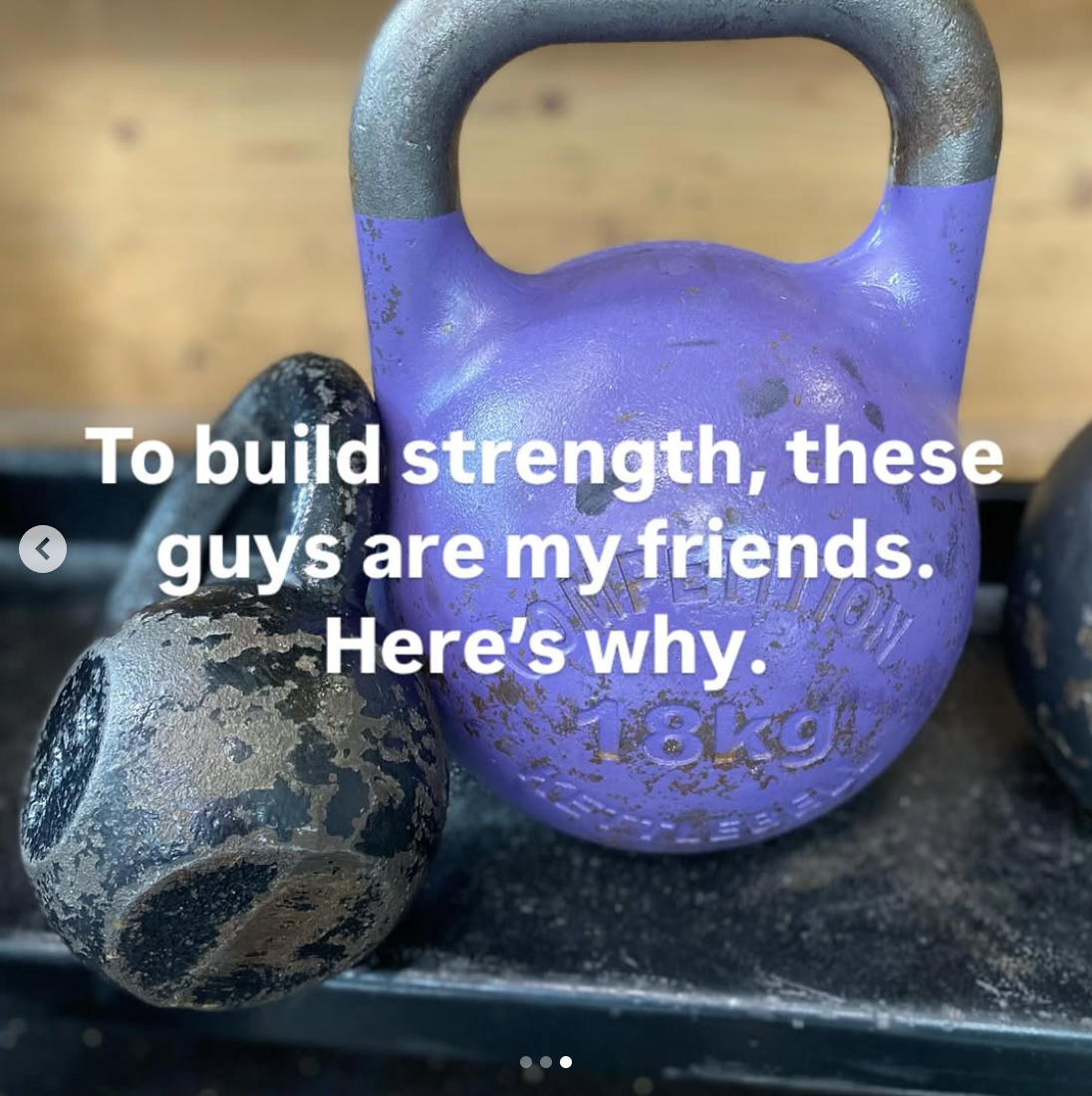
Heavy weights are more effective at building muscle and bone density - both of which are essential for cancer patients and survivors
So I chose bigger weights and did fewer repetitions than usual to ease myself back in. I got into the squat rack and did proper squats with the bar — just with 10 kg less than I was lifting six weeks ago.
Lifting weights is uncomfortable.
It’s hard.
And it needs to be hard (appropriately hard) to stimulate muscle growth.
It doesn’t feel good in the moment — but it feels great afterwards. That “good sore” tomorrow is my body adapting, rebuilding, getting stronger.
For cancer patients, that rebuilding is powerful. Strength training helps preserve muscle during treatment, rebuild afterwards, reduce fatigue, improve confidence, and reclaim a sense of physical control when so much else feels out of your hands.
NB: It goes without saying — build up slowly if you’ve been out of the gym for a while or are new to strength training, especially after cancer. Gentle progression, good guidance, and consistency matter far more than perfection 🥰