
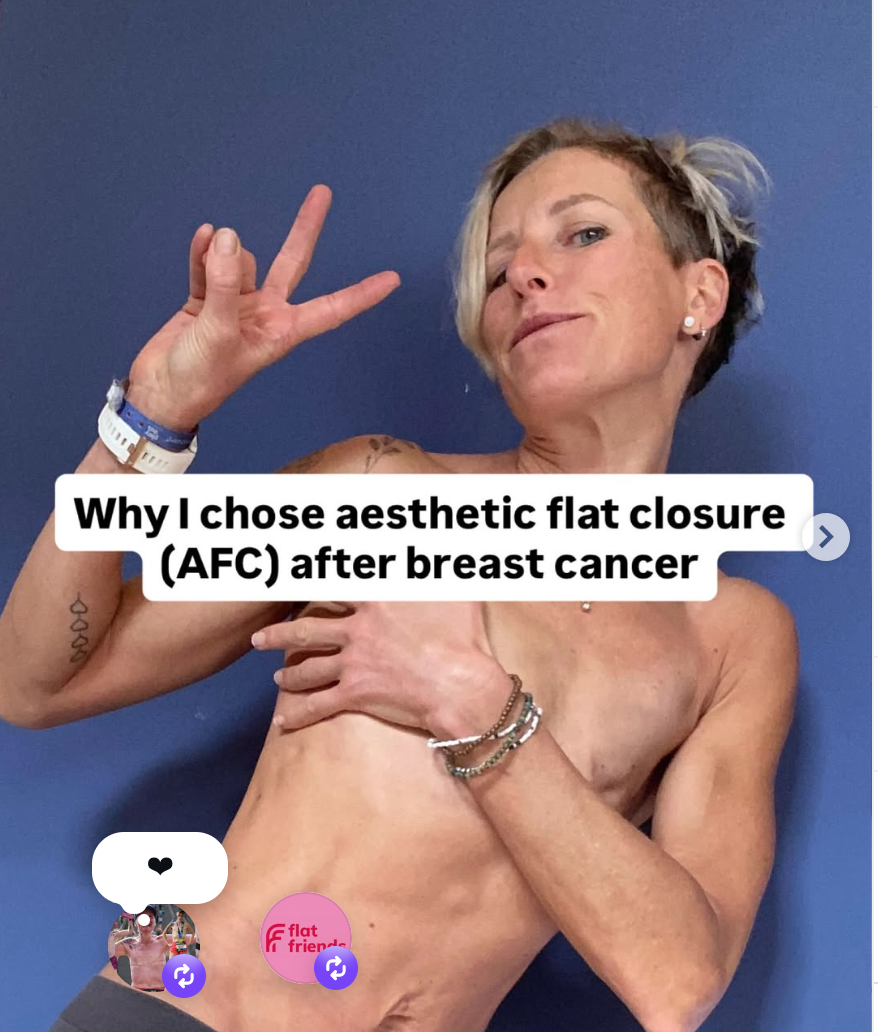
Aesthetic flat closure is becoming a more common choice for women faced with a surgery decision after a breast cancer diagnosis. I have no regrets!
Choosing to go flat after breast cancer: why I chose aesthetic flat closure
Breast reconstruction isn't the only option after a mastectomy. I chose aesthetic flat closure (AFC), and although it took a fight to get there, I wouldn't change my decision. Here's why.
I've written about this subject before, but having just listened to the recent podcast with @oriordanliz and @louisebutcher39, it feels like the right moment to reflect again on why I chose aesthetic flat closure (AFC) as my breast cancer surgery — instead of reconstruction.
Going flat after breast cancer is a choice that's becoming more visible, but it's one many patients still don't know is an option. And, sadly, one that not every surgeon fully understands or supports.
For me, the decision felt instinctive. But getting the surgery I wanted? That was a very different story.
"They were trying to kill me"
When I was diagnosed with breast cancer, I didn't know that aesthetic flat closure was even a thing.
But I knew, almost immediately, that I wanted both my breasts removed.
They were trying to kill me. I wanted them gone.
My priority was to have the quickest, simplest, least risky surgery possible so I could get back to my babies and my sport. I wasn't interested in reconstruction or trying to recreate what I had before. I wanted to deal with the cancer and get on with my life.
I also felt strongly that I wanted symmetry.
It might sound strange to some people, but I could imagine and embrace being completely flat-chested far more easily than having one breast, or having two breasts that looked and felt different.
I wanted my body to feel balanced. I wanted to be able to look in the mirror and feel comfortable with what I saw.
For me, going flat made sense. It wasn't a decision made out of sadness or a lack of femininity. It was simply what felt right for my body and my life.
And yet, I had to fight REALLY hard for that choice.
Having to fight for my own body
My first surgeon was a man, older than me, who reacted to my decision by accusing me of being mad and of mutilating myself.
It was a horrible experience.
I was already dealing with a cancer diagnosis, trying to process what was happening and make decisions that would affect the rest of my life. I didn't have a huge amount of fight left in me.
To be told that my preference was unreasonable, rather than being listened to and supported, made an already stressful time even harder.
I could easily have given up at that point.
When you're navigating cancer treatment, you're often expected to absorb enormous amounts of information, make decisions quickly and advocate for yourself while you're frightened, exhausted and overwhelmed. Having to justify a deeply personal decision about your own body can feel like an unnecessary extra burden.
Luckily, I had a very sympathetic GP who referred me to a second surgeon.
She was a woman, around my age, and she understood me almost instantly.
She didn't make me feel that my decision was wrong or that I needed to be persuaded to change my mind. Instead, she made it her mission to help me get the outcome I wanted.
I know she had to advocate hard to get the healthy breast tissue removed, too. And I will be eternally grateful to her for doing that.
She listened. She understood. She helped me make a choice that felt right for me.
That made all the difference.
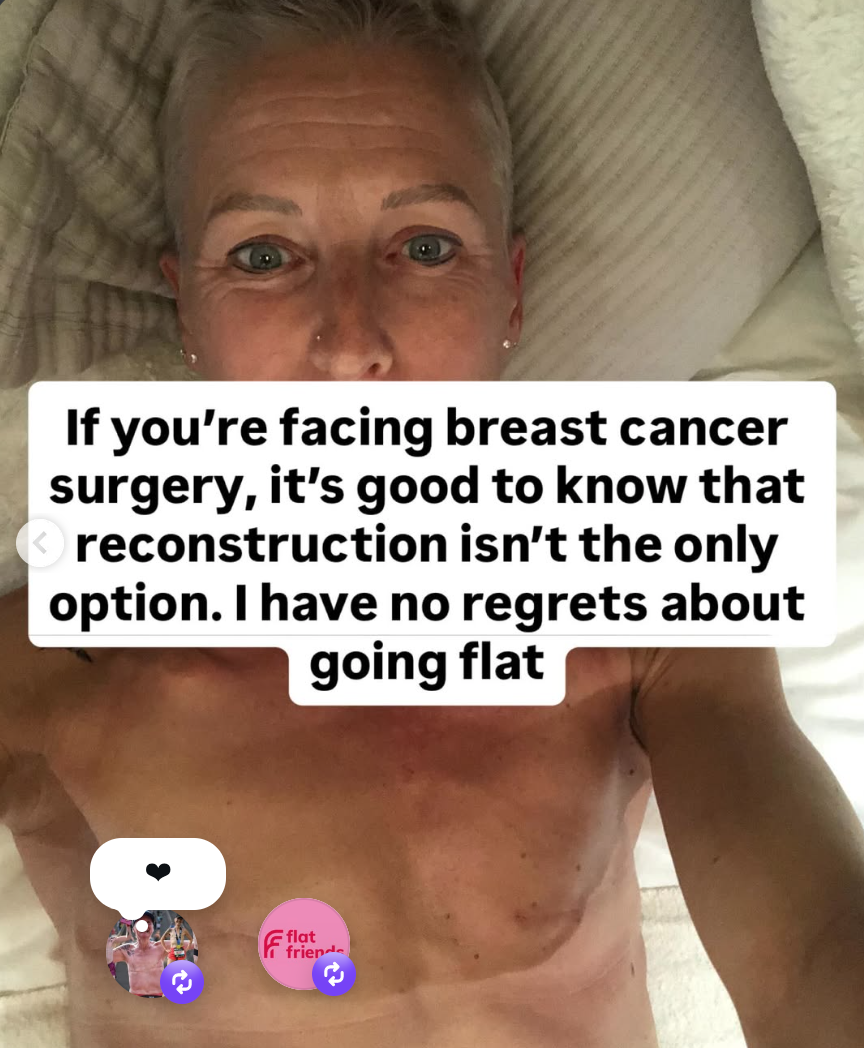
Many breast cancer patients are not even offered the option of flat closure - even though it is the quickest, easiest, safest and least painful surgery option.
What is aesthetic flat closure?
Aesthetic flat closure is a surgical approach to closing the chest after a mastectomy, with the aim of creating a smooth, flat chest contour.
It's different from simply having a mastectomy and leaving the chest without further consideration of its shape. AFC focuses on the appearance and contour of the chest, including the placement of the scar and the removal of excess skin or tissue where appropriate.
For some people, it is the obvious choice. Others choose reconstruction, while some prefer to delay their decision or explore other options.
There is no single right answer.
What matters is that patients understand the choices available to them and have the opportunity to make an informed decision, without feeling pressured towards reconstruction or towards going flat.
I think it's particularly important that people know AFC exists before they make decisions about surgery. You can't choose an option you've never been told about.
And if a patient knows what they want, they deserve to have a conversation with a surgeon who will listen and explain what's possible in their individual circumstances.
Learning to love my flat chest
As weird as it might sound, I love my flat chest.
It has taken me a long time to get to this point. Cancer surgery leaves physical and emotional marks, and it takes time to adjust to a body that looks different from the one you knew before.
But now, when I look in the mirror, I don't see scars and illness.
I see strength.
I see a body that has been through an enormous amount and is still here. I see the scars of an experience that changed my life, but which doesn't define everything about me.
I'm proud of my body. And I'm proud of my scars.
When I think about my chest, I can see a kind of full circle.
Flat-chested as a child. Then youthful cleavage, athletic perkiness, and breasts heavy with breast milk when I became a mum. Middle-aged sag came next — then cancer.
And now? Flat again.
There's something about that symmetry that I really love. It's as though my body has come back to where it started, but with a whole lifetime of experiences in between.
And honestly? I really, really don't miss having boobs.
But that's just me
I've never been a woman who particularly loved or treasured her breasts. At 50, I don't miss them.
Perhaps that makes my decision easier than it might be for someone else. Maybe I would have felt differently if I'd been younger, or if my relationship with my breasts had been different.
Our bodies mean different things to each of us. Breasts can be connected to femininity, sexuality, identity, motherhood and how we feel about ourselves. Losing them can bring grief, relief, or a complicated mixture of emotions.
Some people feel happiest with reconstruction. Others choose to go flat. Some change their minds along the way.
All of those feelings and choices are valid.
I don't share my story because I think everyone should choose AFC. I share it because I want people facing breast cancer surgery to know that reconstruction isn't their only option — and that choosing not to reconstruct doesn't mean you've given up on yourself or your appearance.
For me, going flat was an active, considered choice. It was about what I wanted my body to look like, how I wanted to feel and how I wanted to move forwards.
And I'm very happy with that decision.
Facing breast surgery? You don't have to figure it all out alone
If you're facing breast cancer surgery, give yourself permission to explore all the options. Ask questions. Find out what aesthetic flat closure involves, and whether it's suitable for you. If you don't feel heard, consider asking for a second opinion.
You deserve to make decisions about your body with the right information and support.
And if you're considering going flat and would like to chat to someone who has been there, please feel free to reach out. I'm always happy to share my experience — honestly, openly and without judgement.
This is your body, your life and your decision.
You don't have to choose the option other people expect of you. You get to choose what feels right for you. ❤️
Steph xx