
Why winning my first long distance triathlon (AG) means so much more after cancer
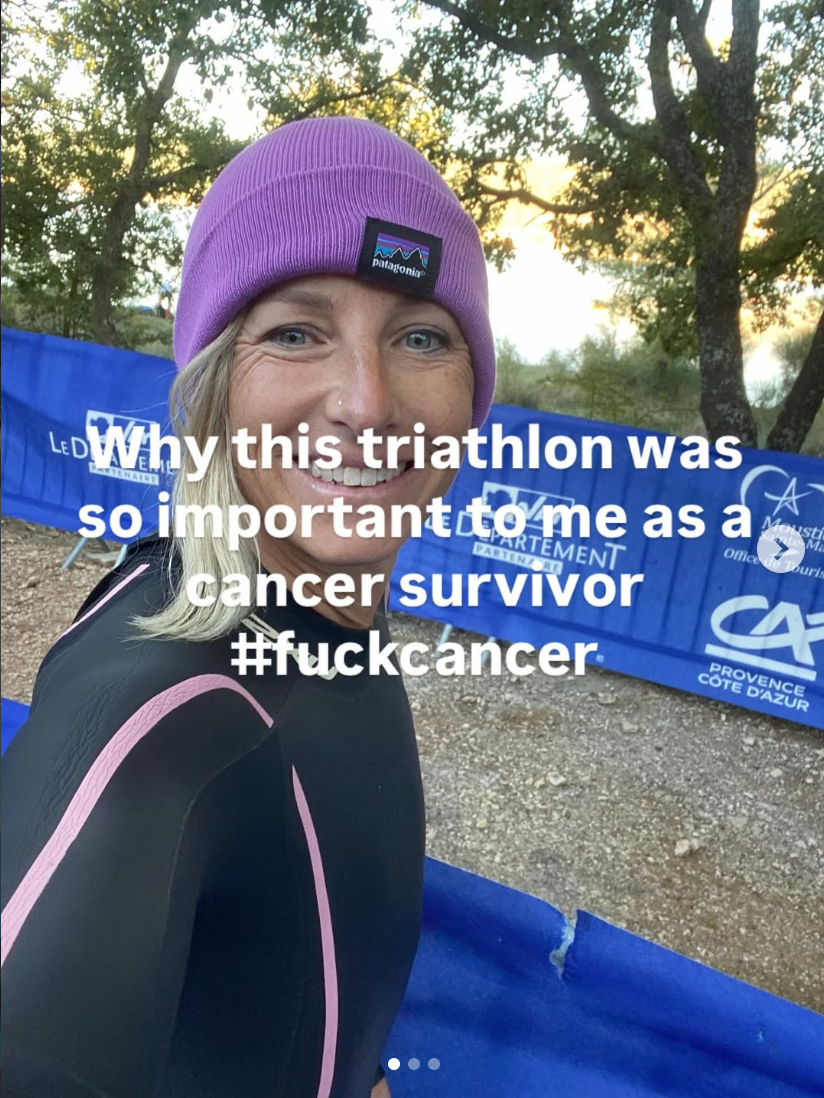
Getting to a level of fitness that I’m happy with after cancer has been so important to me. Not because I won it (which was a nice surprise) but because setting a goal and showing myself I could do something hard was essential to my recovery
Today, I completed a triathlon called @triathlon_natureman_woman_var, which has been on my radar for about a decade. I have wanted to do this race, in the breathtaking Verdon Gorge, since long before kids. And long before cancer.
And today, I did it.
I haven’t felt this nervous about a race for a very long time. It was the longest triathlon I’ve attempted — 2km swim, 92km bike, and 20km run. I’ve been training for it since November last year. But in these last two months, life has been… well, life. Summer holidays, work, family commitments — and the everyday juggle of being a cancer survivor — all got in the way of the long sessions I would have liked.
So yes, I was really nervous.
I needed this race to prove something to myself. Not to anyone else, not to my family, not to social media. I needed it to prove that I am not defined by cancer. That I can still do hard sh!t. That I can still set a goal, plan for it, execute it, and see it through. That I can still push my body and my mind, even after all I’ve been through.
Setting personal goals has been so important in my journey after cancer. There’s a tendency, when you’ve been through something so life-changing, to play it safe. To shrink your ambitions. To think, “Maybe I’ll just keep things easy now.” But I’ve learnt that challenging yourself, setting achievable but meaningful targets, is what keeps you alive in body, mind, and spirit. Goals give us direction, focus, and motivation. They remind us that life is still rich with possibilities.
The race started badly! It was 6 degrees at the start line, freezing cold for a swim, and I panicked as soon as I got in the water. All the demons came to whisper in my ear — the fear, the doubt, the panic — and I spent the first 500 metres breast stroking, hyperventilating, thinking, I can’t do this.
And then I reminded myself: I can do tough stuff. I have done tough stuff. I’ve survived cancer. I’m doing this for fun, for me, for the sheer joy of proving to myself that my body is still capable of incredible things.
Once I settled into the swim, it became easier. And the bike… oh, the bike! The scenery was stunning, and the kilometres flew by as I focused on cadence, breathing, and simply enjoying the ride. And then the run — as predicted — was hard. Legs heavy, lungs burning, but still moving, still pushing. And when I crossed the finish line, I was over the moon. I had done exactly what I planned to do, and I didn’t even realise at the time that I had won my age category. That was a lovely surprise, and the cherry on top of an already unforgettable day.
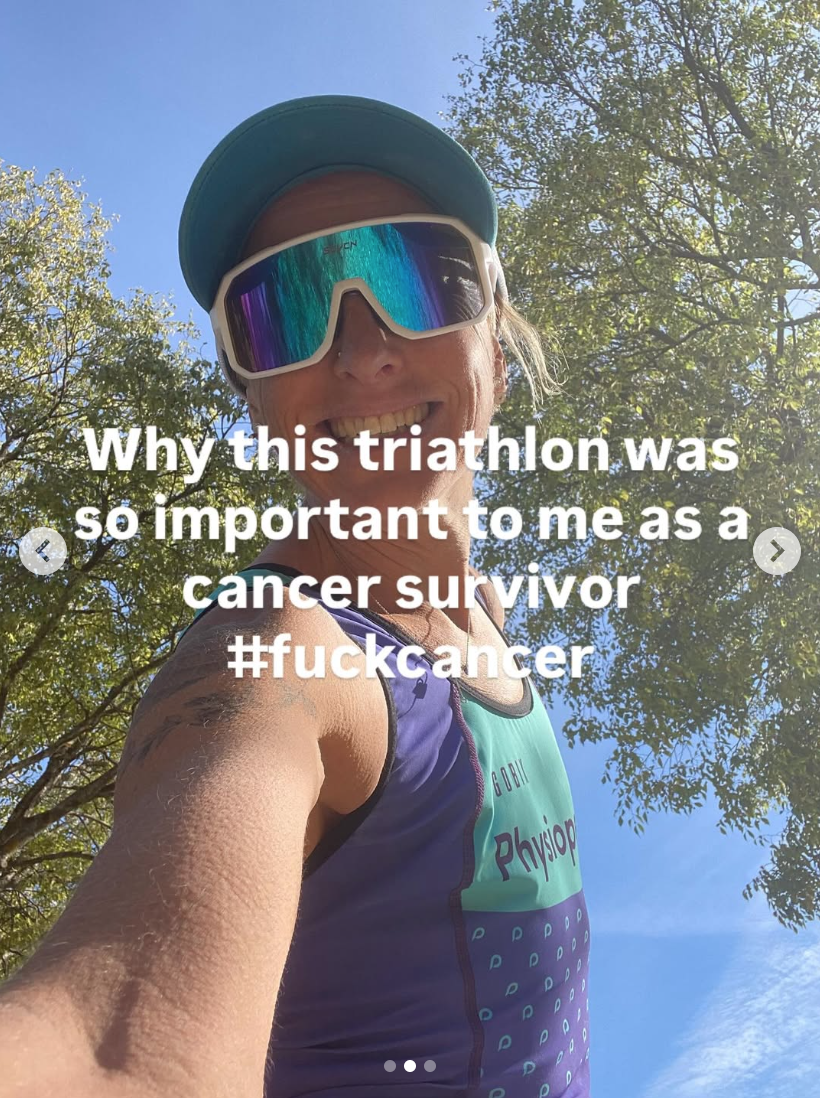
I needed to prove to myself that I am capable of being properly fit again, of setting myself a challenge and of training for something I really, really want
This race was more than just a sporting achievement. It was a firm, two-finger salute to cancer — a reminder that it does not define me. It was a leap forward, proof that I can still do the things I love. And I can do them well. Even after cancer. Even menopausal. Even while on hormone therapy.
Returning to fitness after cancer isn’t always straightforward. Our bodies are different now. We may have lingering side effects — fatigue, neuropathy, hormonal changes, joint issues. We may not have the same stamina, strength, or confidence we once did. And that’s ok. The key is to start where you are, set personal goals that challenge you without overwhelming you, and celebrate every step forward. Every swim, every bike ride, every run is progress. Every finish line, big or small, is proof that your body is resilient and your spirit is unbroken.
Setting personal goals also gives you something to look forward to. Training for a race, planning a hike, or simply committing to walk a certain number of steps a week — these targets provide focus, routine, and motivation. They remind us that life after cancer can still be full of achievements and joy, no matter what has been taken from us.
So if you’re a cancer survivor wondering if you can ever get back to the fitness you once had — or even surpass it in new ways — know this: you can. Start small if you need to, but set a goal. Plan for it. Work towards it. And allow yourself to feel proud when you achieve it, however long it takes or however modified your journey needs to be.
Because I promise you — crossing that finish line, knowing I had fought my own doubts, fears, and fatigue, reminded me that cancer may have changed my life, but it hasn’t stopped me from living it fully.
Even after cancer, we can still aim high, push ourselves, and prove - to ourselves most of all - that we are capable of more than we think.
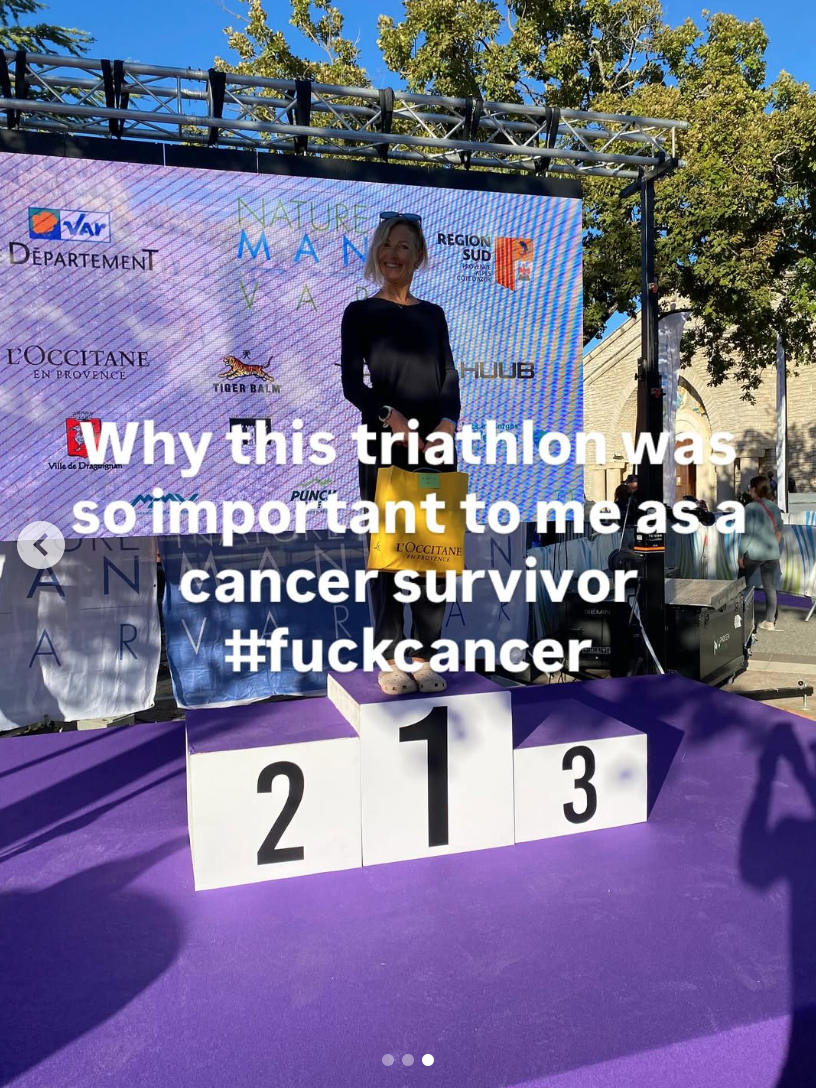
It was a lovely surprise and felt wonderful to win my age group in my first longer distance triathlon - as an almost 50 year old, menopausal cancer survivor. Still got t :)