
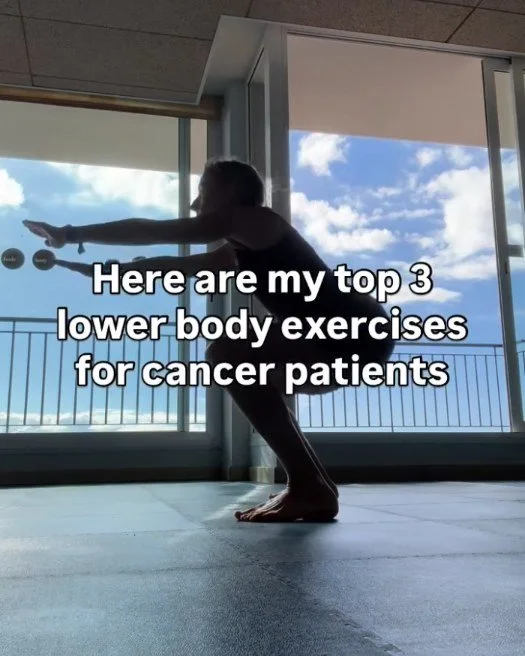
Exercise after cancer can seem overcomplicated. It really doesn't need to be. Here are my top three lower body exercises for cancer patients and survivors to try at home. Why do I love these ones? They're simple, you don't need any equipment, and they work. They're as easy or as hard as you want them to be.
🦵 Why leg strength matters during and after cancer
Cancer treatment takes a real toll on our muscles. Weeks or months of chemotherapy, surgery, radiotherapy and fatigue mean many of us lose a lot of strength – and our legs are often where we notice it most. Getting up from a chair, climbing the stairs, carrying the shopping, getting back to walking or running: it all depends on strong legs.
There's another reason too. Leg strength in our 40s and 50s is one of the best predictors of independence later in life. And for those of us on hormone therapy for breast cancer, who are at higher risk of osteoporosis, strength training and load-bearing exercise are some of the best tools we have to protect our bones.
Basic bodyweight movements – squats, lunges, calf raises – are "old classics" for a reason. They target the major muscle groups, they're functional (they mimic how we move in everyday life), and they will get you strong.
1. Bodyweight squat 🪑
In my Instagram video, I'm pulsing for three low squats and then powering up into a jump – as high as I can! But remember to start where you are.
How to do it: Stand with your feet about hip width apart. Inhale as you sit back and down, as if you're sitting into a chair. Exhale as you stand back up.
Make it easier:
If you're just beginning, try sit-to-stands from a chair.
If your balance isn't great, hold onto a chair or the wall for stability.
If you're worried about your knees, try a mini squat and build up to sinking lower over time.
Make it harder: Add pulses at the bottom, slow the lowering phase right down, or add a jump at the top once you've rebuilt your base strength and have the all-clear for impact.
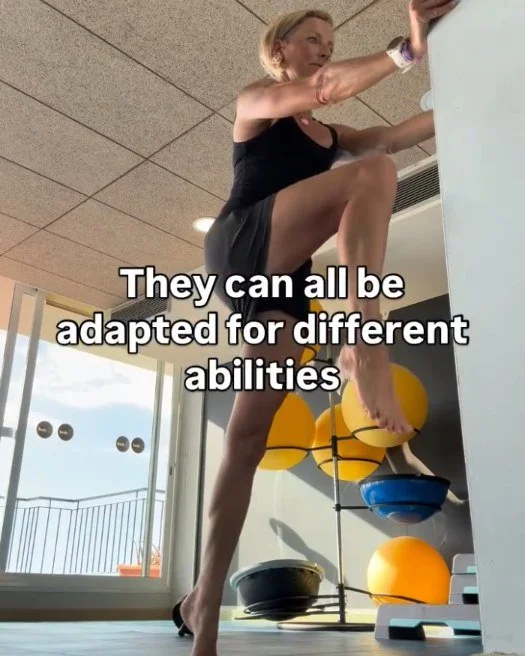
2. Calf raise 🍐
This is my favourite calf exercise because it takes both calf muscles – the gastrocnemius and the soleus – through their full range of movement. It's hard. In my Instagram video you can see my weedy soleus shaking! But it's very effective.
Strong calves matter more than you'd think after cancer. They help with balance, walking, stairs and running, and they're often neglected. If you've had joint or tendon pain from hormone therapy (I've had a lot of trouble with my feet), calf strength is one of the things that can really help.
How to do it: Stand tall and rise up onto the balls of your feet, then lower slowly with control.
Make it easier: Start with two-legged calf raises sitting down, or standing with your hands against a wall.
Make it harder: Build up to single leg calf raises. When you can do eight good single leg raises, try them on the edge of a step so your heel can drop below the step at the bottom.
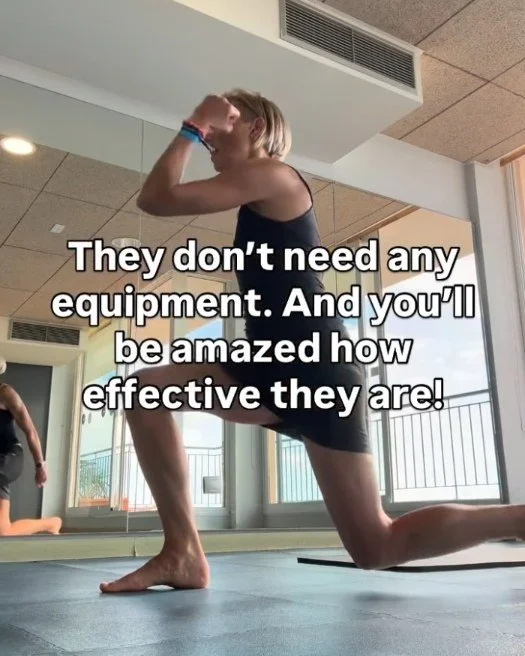
3. Reverse lunges 🪜
In my Instagram video I'm doing a runner's lunge, making the movement dynamic and adding a hop at the end. These are sooooo good. They use every single leg muscle and really challenge your balance – something that often takes a hit during cancer treatment.
How to do it: Step one foot back and lower into a lunge, aiming for roughly 90 degrees at both knees. Push back up to standing. Keep your feet hip width apart – which is wider than you think – for added balance.
Make it easier: Start small, just stepping back into a mini lunge, using a wall or chair for balance.
Make it harder: Build up to faster lunges, then add the hop.
✅ How many should I do?
I normally do three sets of eight of each exercise. If you're newer to exercise after cancer, start with one or two sets of a few reps and build up gradually. Quality matters far more than quantity.
A few things to keep in mind:
Listen to your body. Cancer-related fatigue can vary hugely from day to day. On a low energy day, a single set is still a win.
Check with your medical team if you've recently had surgery, have bone metastases, or have any concerns about your balance or bones.
Leave impact (jumps and hops) until you're ready. Build strength and control first.
Breathe. Don't hold your breath – exhale on the effort.
❓ Common questions about leg exercises after cancer
Can I do these exercises during cancer treatment? Often, yes – gentle strength exercise during treatment can help maintain muscle and reduce fatigue. Start with the easiest version, keep the effort light to moderate, and check with your oncology team first, particularly after surgery.
How often should cancer survivors do strength exercises? Guidelines for cancer survivors recommend strength training at least twice a week, working the major muscle groups.
💬 Give them a try today
You don't need a gym, a lot of time or any fancy equipment to get stronger after cancer. Ten minutes of these three exercises a couple of times a week is a brilliant place to start.
If you'd like help adapting these for your body, your cancer treatment stage or your current fitness level, get in touch. And if you'd like to work on your core next, try my 3 simple core strength exercises for cancer survivors.