
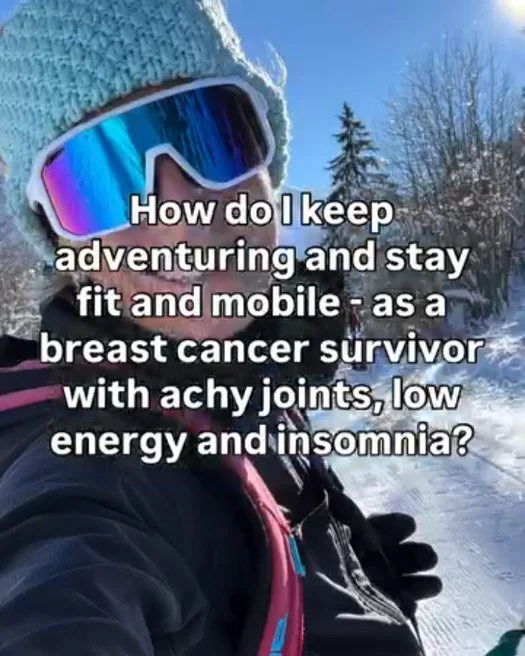
You could be forgiven for thinking that I sailed through cancer treatment and into life after cancer with barely any symptoms or side effects. It's not true! So if you're an achy cancer survivor who feels permanently exhausted – yes, me too. I get it.
Here's how I've learnt to manage the long-term side effects of cancer treatment so that they don't get in the way of my fun and adventures.
🔥 Joint pain after cancer treatment
For me, the first year after cancer treatment was horrible. I had the after-effects of chemotherapy, and then hormone therapy for breast cancer on top. Aromatase inhibitors are well known for causing joint and muscle aches, and I felt it everywhere – especially my feet, knees and hands.
The good news? With time, my joint aches have become much more manageable. I still have flare-ups. But exercise – and rest when I need it – really, really helps.
I notice that if I have a couple of days of inactivity, my joints are so much worse. I feel about 100 years old, and then it's even harder to get going again. It's a cliché, but it's true: motion is lotion. Gentle, regular movement keeps stiff joints moving and is one of the most effective tools we have for hormone therapy joint pain.
💦 Swimming: gentle on the joints
Swimming helps me massively. It's gentle on the joints and really mobilises everything. I know, I know – it's super hard in winter. It's pretty much my least favourite thing to do when it's cold and dark. But honestly, I feel so good afterwards.
It's also great for lymphoedema prevention, which is important for anyone who's had lymph nodes removed or radiotherapy as part of their breast cancer treatment. If you're at risk of lymphoedema, check with your cancer care team or lymphoedema specialist for advice that's right for you.
💤 Sleep problems after cancer
I am not a very good sleeper. Night sweats, hot flushes and insomnia are common side effects of cancer treatment and treatment-induced menopause, and I've learned to accept that I'll probably only get about one really good night's sleep a week. The rest of the time, I manage.
What helps me:
I do my exercise and work early in the day, when I'm freshest.
Good sleep hygiene as much as possible: not eating too close to bedtime, limiting alcohol and caffeine, and reducing screen time in the evening.
Trying not to stress – in general, and about not sleeping. Easier said than done! This is my weakest point.
I've also noticed a strong link between sleep and pain. If I've had a bad night, my feet, knees and hands feel horrible the next day. When I have a phase of good sleeps, my joint pain is much more manageable.
💪 Mobility and core first, then strength
When I'm in the gym, I spend at least half of my time mobilising and working on core strength, with controlled bodyweight movements – like Pilates – and stretches. Then I hit the big weights.
This approach helps me stay injury-free and helps prevent joint pain. After cancer treatment, our tendons, ligaments and muscles often aren't as resilient as they used to be, so preparing the body properly before loading it makes a huge difference. If you're struggling with niggles, have a read of why I kept getting injured after cancer.
Strength training is also one of the best things you can do for your bones, which is especially important on hormone therapy. More on that in why strength training is so important for cancer patients and survivors.
🏃 Choosing my exercise wisely
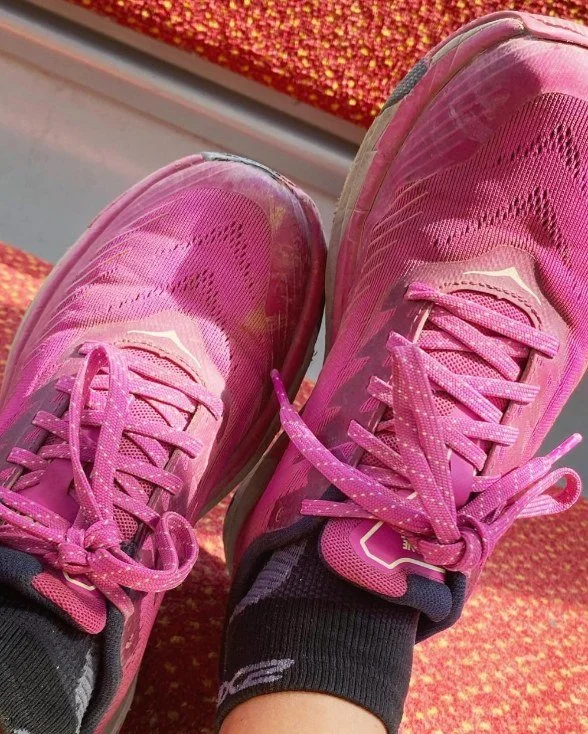
I will always love running. But my body can't handle as much impact as it used to. So these days I choose my exercise more wisely. I opt for walking, cycling, swimming or other activities and cross-train as much as I can, rather than running every day.
Cross-training means I can keep my fitness high while giving my joints a break. It's also more interesting – and variety is good for motivation.
🛌 Respecting fatigue
Cancer-related fatigue isn't ordinary tiredness, and it doesn't always follow logic. Some weeks I can do a hard session and feel fine the next day. Other times it hits me days later. I need much more recovery time than I did before cancer.
So I try to respect the days when I need a slow day, without getting frustrated or feeling like I've underachieved. Gentle movement on those days – a walk, some mobility – usually helps more than complete rest.
💬 Hang in there – it gets better
Living with the long-term side effects of cancer treatment can be exhausting and frustrating. But in my experience, they do get more manageable with time, consistency and the right kind of movement.
A quick summary of what helps me:
Move every day – motion is lotion for achy joints.
Swim or try other low-impact exercise.
Protect your sleep where you can.
Mobility and core work before heavy lifting.
Cross-train rather than doing high-impact exercise every day.
Rest when you need to, without guilt.
If you'd like help building an exercise routine that works with your cancer treatment side effects rather than against them, get in touch.
Hang in there. It gets better. 💛