
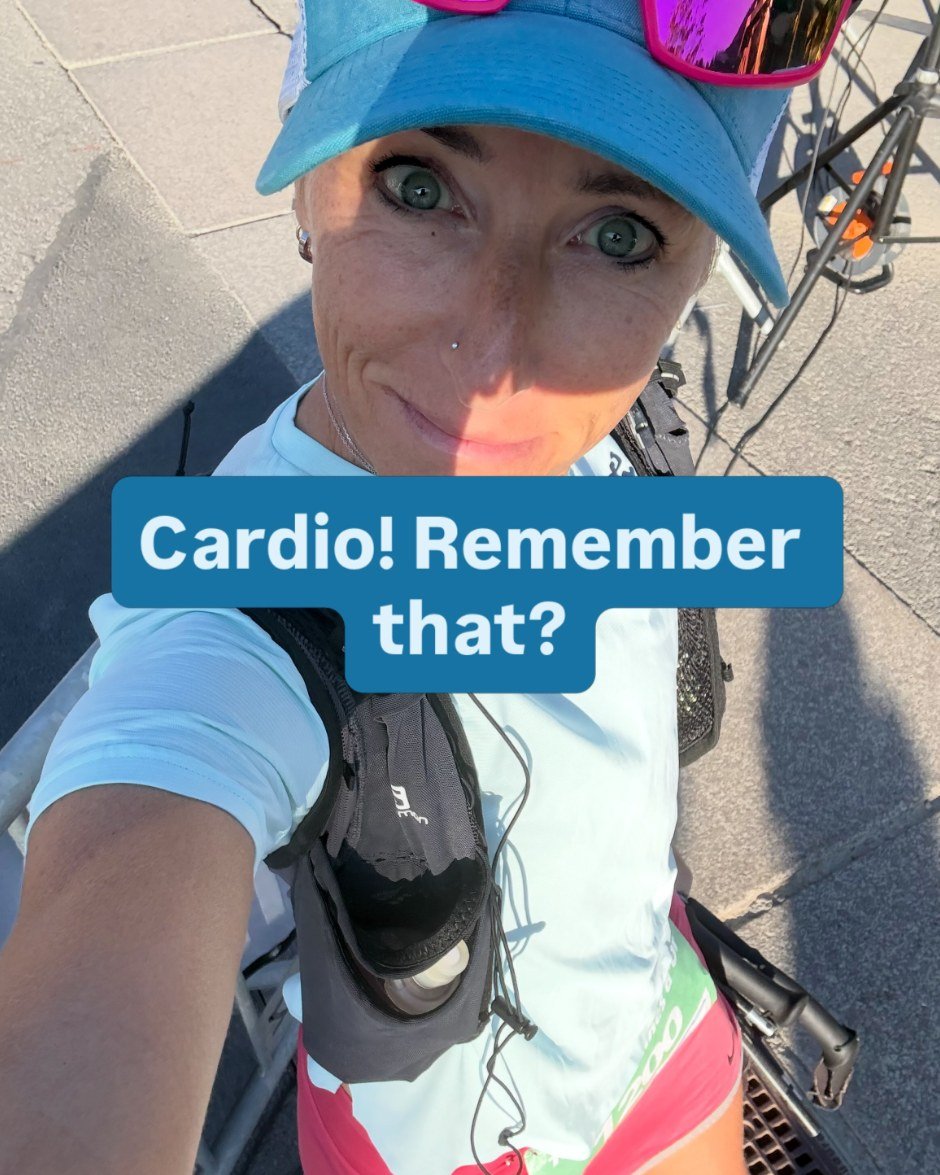
I'm a cardio girl. Always have been. Former running athlete, endurance lover, and someone who genuinely believes that finding your rhythm on a long run is one of life's great pleasures. Endurance makes my heart sing.
So you'd think rebuilding my fitness after cancer would have come naturally. It didn't. It was hard, and it was frustrating.
Chemotherapy is tough on the heart and lungs. Add surgery, radiotherapy, months of fatigue and hormone therapy, and most of us come out the other side having lost a huge amount of our base fitness.
Running is a huge part of my life and my identity. So it was heartbreaking to lose my fitness because of cancer treatment. There were days during cancer treatment when I would stand at the bottom of the stairs and wonder if I could get to the top.
If you're there right now – puffed out on the stairs, wiped out after a walk, missing the person who used to run, swim, cycle or dance without thinking – this one is for you. Because your stamina can come back. Mine did. It just doesn't come back by looking backwards.
🔬 Why cardio matters after cancer: the science
Cardio feels a bit out of fashion right now. It's all about lifting heavy, building muscle and protecting our bones – and rightly so. But please don't forget about your engine.
Aerobic exercise – walking, cycling, swimming, running, rowing, dancing, anything that gets your heart and lungs working – has some impressive benefits for people living with and beyond cancer:
Heart health. Some cancer treatments, including certain chemotherapies, can affect the heart. Cardio supports cardiovascular fitness when we need it most.
Less fatigue. It sounds backwards, but regular aerobic exercise is one of the best-evidenced ways to reduce cancer-related fatigue. Moving can make you feel less tired.
Stamina for life. A bigger engine makes everyday life easier – stairs, shopping, keeping up with the kids – and opens the door to bigger adventures.
Healthy ageing. VO2 max, our body's maximum ability to use oxygen, naturally falls as we age. A good VO2 max in our 40s and 50s is one of the best indicators of longevity and independence later in life.
The CHALLENGE trial
Then there's the headline result. The CHALLENGE trial, published in the New England Journal of Medicine in 2025, followed 889 people who had finished chemotherapy for colon cancer. Half were given health education materials. The other half did a three-year structured exercise programme with support from a coach, built around aerobic exercise they chose themselves.
The results:
28% lower risk of the cancer coming back, a new cancer or death.
At five years, 80% of the exercise group were disease free, compared with 74% of the education group.
At eight years, 90% of the exercise group were alive, compared with 83%.
This was a randomised controlled trial, the gold standard of evidence. It's one of the strongest signals yet that exercise isn't a nice-to-have after cancer. It's part of the treatment. And it was built on cardio.
The trial was in colon cancer, so we can't simply copy the numbers across to every cancer. But it adds to a growing body of research linking regular physical activity with better outcomes for many cancer survivors.
👣 Start: begin where you are, not where you were
The biggest trap I see – and one I fell into myself – is measuring yourself against who you used to be. I used to run 10k. I used to swim a mile. I used to walk up this hill without stopping.
I get it. But comparing yourself to your pre-cancer self is a guaranteed route to frustration. Your body has been through something huge. It deserves a fresh start, not a performance review.
So start where you are today:
If walking to the end of the road is hard, that's your starting line. Walk to the end of the road.
If you can walk for 20 minutes, add a gentle hill, or a few minutes at a slightly brisker pace.
If you're back running, keep most of your runs easy and conversational. You don't need to prove anything.
A useful guide is the talk test. At an easy, steady effort, you should be able to hold a conversation. Most of your cardio, especially early on, should feel like this. On a scale of 1 to 10, aim for around 4 to 6 out of 10.
And check in with your medical team before you start, especially if you've had treatment that can affect the heart, or if you have any concerns.
🪙 Move: don't spend all your energy tokens
Cancer-related fatigue isn't ordinary tiredness. It doesn't always follow logic, and it doesn't always lift with rest.
I find it helps to think of energy as tokens. Each morning you wake up with a certain number. Some days you get a full purse, some days just a few coins. Everything costs tokens: work, the school run, a difficult conversation, a bad night's sleep, a workout.
The mistake is spending them all on a good day. You feel great, so you go for a long walk, do the big shop, clean the house and catch up with a friend. Then you crash for three days. That's the boom-and-bust cycle, and it's one of the biggest barriers to rebuilding stamina after cancer.
Instead:
Keep some tokens in reserve. Finish a session feeling you could have done a little more.
Consistency beats intensity. Three short, gentle walks a week will do more for your stamina than one heroic effort followed by a week on the sofa.
Adjust to the day. Slept badly? Feeling flat? Go shorter and easier. It still counts.
Notice the delay. Fatigue can hit a day or two later. Keep a simple note of what you did and how you felt, so you can learn your own pattern.
Gentle movement often gives you tokens back. A slow walk in daylight on a low day usually leaves me feeling better than doing nothing at all.
📈 Progress: your heart gets fitter faster than your joints
Here's the good news. Cardiovascular fitness responds quickly. Within a few weeks of regular aerobic exercise, your heart and lungs start to adapt, and things that left you breathless begin to feel easier. It's hugely motivating.
Here's the catch. Your muscles, tendons, ligaments and bones adapt much more slowly – over months rather than weeks. And after cancer treatment, those tissues are often less resilient than they were. Chemotherapy and hormone therapy can affect connective tissue, and many of us lose muscle during treatment.
So your engine is ready for more before your chassis is. You feel fit enough to run further or faster, and that's exactly when the niggles and injuries creep in. I learned this the hard way. If you've been there too, have a read of why I kept getting injured after cancer.
To progress safely:
Change one thing at a time. Go a little longer, or a little faster, or add a hill. Not all three at once.
Build gradually. Small weekly increases add up fast over a few months.
Mix it up. Cross-train with walking, cycling, swimming or rowing, so you're not hammering the same joints every day.
Listen to pain. Muscles feeling worked is normal. Pain that lingers, worsens or changes how you move is a signal to back off and get it checked.
Once you've built a solid base, and with medical sign-off, you can add some harder efforts. I wrote about when and how in HIIT after cancer.
💪 Cardio and strength: you need both
I'm absolutely not saying ditch the weights. Strength training matters, a lot. But we need both.
This is especially true for mid-life women after cancer. Many of us have gone through menopause early or suddenly because of treatment, or we're on hormone therapy. Falling oestrogen speeds up the loss of muscle and bone, and raises our risk of heart disease. That's a lot to protect at once.
Strength training builds and keeps muscle, protects your bones and makes your joints and tendons more resilient. It's what helps your chassis catch up with your engine.
Cardio looks after your heart, lungs and blood vessels, lifts your energy, eases fatigue and builds the stamina to actually enjoy life.
As a starting point, international guidelines for cancer survivors suggest working towards around 150 minutes of moderate aerobic activity a week, plus strength training twice a week. Don't worry if that feels a long way off. It's a direction of travel, not a pass mark.
Let's not forget the engine while we're busy strengthening the chassis.
❓ Cardio after cancer: common questions
How long does it take to rebuild stamina after cancer? It varies hugely, depending on your treatment, side effects and starting point. Many people notice their breathing and energy improving within a few weeks of regular, gentle cardio. Rebuilding fully can take months, so be patient and keep showing up.
I'm exhausted. Won't cardio make my fatigue worse? For most people, the opposite is true. Regular aerobic exercise at a manageable effort is one of the most effective ways to reduce cancer-related fatigue. Start small, keep it easy and keep some energy tokens in reserve.
What's the best type of cardio after cancer? The one you'll actually do. Walking is a brilliant place to start. Cycling, swimming, rowing and dancing are all great, and low-impact options are kinder on achy joints.
Is it safe to do cardio during cancer treatment? Often, yes, at a gentle level, and it can help with fatigue and wellbeing. Check with your oncology team first, particularly if your treatment can affect your heart.
✨ One step in front of the other
Rebuilding your stamina after cancer isn't about getting back to who you were. It's about building a body that carries you into the life you want now.
Some days will feel brilliant. Some days a walk round the block will be a victory. Both count. Start where you are. Move in a way that respects your energy. Progress, gently, one small change at a time.
Your heart is stronger than you think. Lace up your shoes, step outside, and put one foot in front of the other. Then do it again tomorrow. 💛
If you'd like support rebuilding your stamina, Get Me Back and I have teamed up to create a Cardio & Fitness Programme for women living with and beyond cancer. It's a friendly, supportive space to build your cardio fitness and your confidence, whatever your starting point. I'd love to have you with us.